2026-09-02 · Mike Sorensen
When to Repair and When to Replace a Furnace in the Treasure Valley
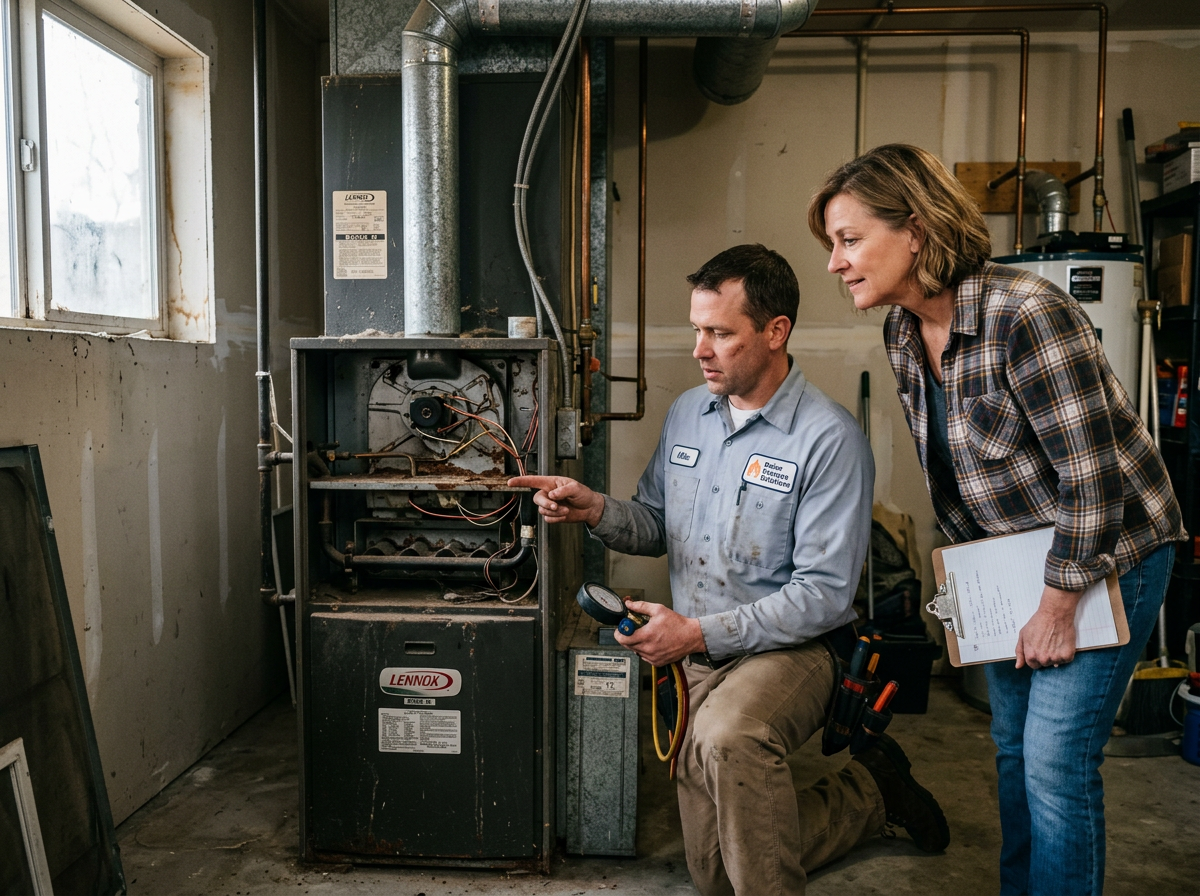
Repair a furnace when problems stay limited to one component and the unit is 8–12 years old; replace it once the system reaches 15 years, needs multiple fixes in a season, or annual repair costs climb past $800 while efficiency stays at 80%. These thresholds shift in the Treasure Valley because winter inversions force furnaces to run continuously rather than cycle, and wildfire smoke demands tighter filtration that older blowers cannot support.
Local Conditions That Change Repair Versus Replacement Math
Treasure Valley inversions trap cold air for days, so an 80% furnace in a 2010 Meridian tract home runs at steady high output instead of short cycles. This sustained load wears heat exchangers faster than national averages suggest. Wildfire smoke seasons add another layer: standard 1-inch filters clog within weeks, pushing MERV 13 upgrades that older motors struggle to pull. Shoulder seasons bring 35–40°F daily swings that stress ignition systems and cause expansion cracks in ductwork retrofitted into North End bungalows. Propane units on rural Kuna properties face the same temperature swings but add tank-level monitoring needs. These factors shorten the window where repair pays off compared with milder climates.
Clear Signs Repair Is Still Worthwhile
Focus on single-issue failures such as a cracked igniter, worn blower belt, or capacitor that costs $250–$450 to fix. If the furnace is under 12 years old and the heat exchanger shows no cracks during inspection, these repairs restore reliable operation through another inversion period. Homeowners in Star and Caldwell subdivisions often see one-off limit-switch trips caused by dirty filters during smoke events; swapping to a MERV 11–13 filter and resetting the switch resolves the problem without further cost. Track the last three service calls—if they address different parts and total under $600, repair keeps the system viable.
When Replacement Becomes the Practical Choice
Replacement is the logical step once the furnace hits 15 years, the heat exchanger fails, or two service calls exceed $1,200 in one heating season. 2000s–2020s builder-grade units in Eagle and Middleton commonly reach this point together, with rusting cabinets and motors that cannot handle upgraded filtration. In dry air with large temperature swings, a new 95% two-stage model sized at 60,000–80,000 BTU maintains even temperatures and cuts short-cycling. Link the decision to the article on furnace sizing for Boise's dry air and 40-degree daily swings to avoid oversizing that wastes energy during shoulder months.
How Smoke and Filtration Affect Long-Term Costs
Wildfire smoke forces more frequent filter changes—every 3–4 weeks instead of 90 days—which increases static pressure on aging blowers. Upgrading to a media cabinet with MERV 13 filtration often requires a new furnace because older 80% models lack the motor capacity. The article Wildfire Smoke and Your HVAC: What Boise Homeowners Should Change details the exact cabinet and filter combinations that work with local duct layouts. When smoke-related repairs start repeating yearly, replacement with a variable-speed model prevents ongoing filter and motor expenses.
Practical Takeaway
Check the furnace data plate for manufacture year, count service calls from the past two seasons, and note how often filters clog during smoke events. If the unit is 15 years or older or repairs keep exceeding $800 annually, schedule a replacement evaluation rather than another repair.