2026-09-02 · Mike Sorensen
Why Treasure Valley Winter Inversions Make Your Furnace Run Non-Stop
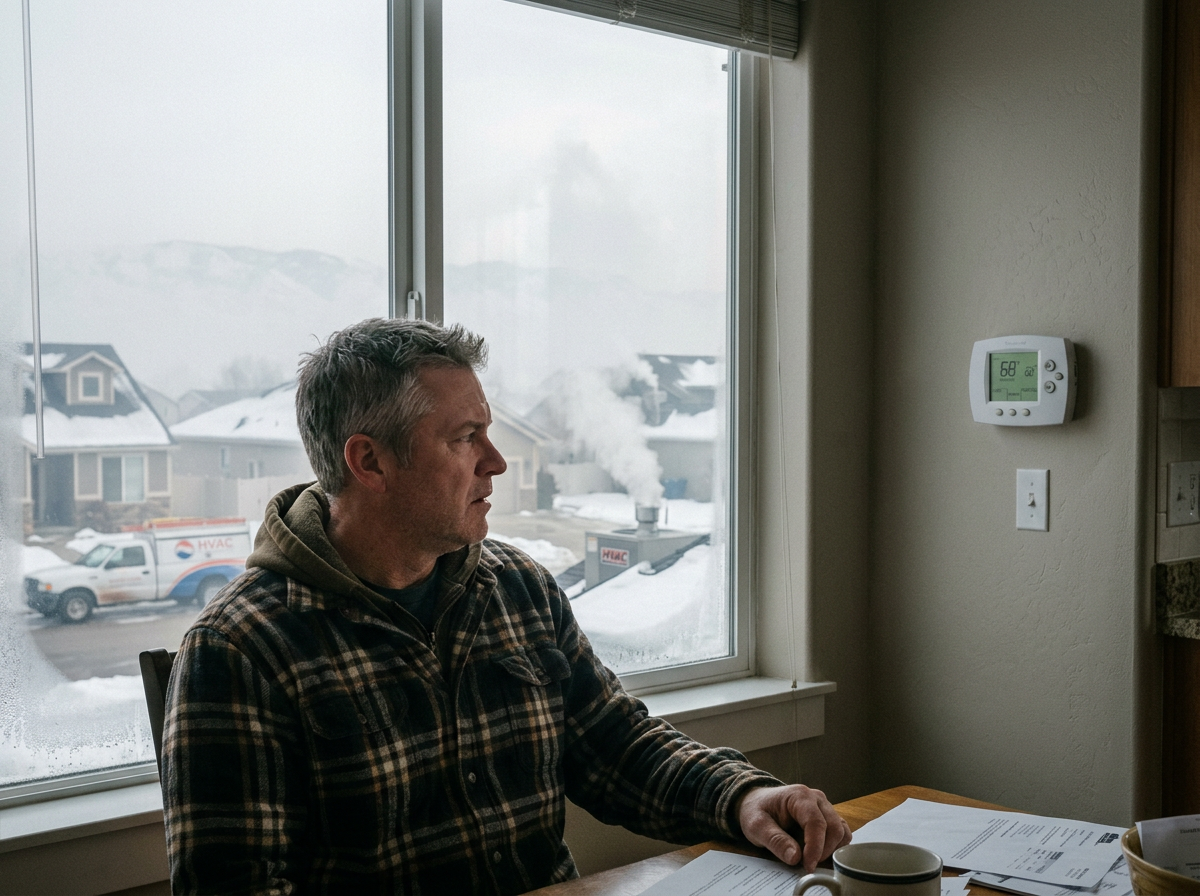
Treasure Valley winter inversions hold cold air in the basin for three to seven days at a stretch, keeping outdoor temperatures between 18°F and 28°F around the clock so furnaces run continuously instead of cycling on and off every 15 to 20 minutes.
How Inversions Change Furnace Operation
Inversions form when a layer of warmer air sits above the valley and prevents colder surface air from rising. This traps the cold mass so daytime highs never climb above the overnight lows. A typical 80% furnace sized for 60,000 to 80,000 BTU in a 2,000-square-foot Meridian tract home must therefore maintain output for 18 to 24 hours straight rather than the usual 30 to 40 percent duty cycle. The heat exchanger stays at temperature the entire time, blower motors run without rest, and indoor thermostats rarely satisfy. Homeowners notice the difference first in higher utility bills that can climb $90 to $140 per month during a single inversion event compared with normal cycling weather.
Effect on Builder-Grade 80% Furnaces in Tract Homes
Homes built in Meridian, Kuna and Star between 2005 and 2020 commonly received 80% single-stage furnaces paired with basic ductwork. These units were never designed for multi-day continuous duty. After 8 to 12 years the heat exchangers develop fatigue cracks, blower wheels collect dust that reduces airflow, and limit switches trip more often. The nonstop runtime accelerates wear on the inducer motor and control board. Many of these systems now reach the point where repair costs approach 60 to 70 percent of a new unit price, making replacement the practical choice before the next inversion season.
Added Load from Dry Air and Shoulder-Season Swings
Boise’s air holds very little moisture, and 35°F to 40°F daily temperature swings are common in shoulder months. When an inversion arrives the swing disappears and the low temperature locks in. Furnaces must overcome both the absolute cold and the rapid heat loss through single-pane windows and poorly sealed ducts common in North End bungalows and rural propane homes. The result is longer run times even after the inversion lifts, because the house has lost more heat than a normal on-off cycle would allow.
Filtration Demands During Wildfire Smoke Events
Inversion layers also trap wildfire smoke from southwest Idaho seasons. Homeowners must change MERV-13 or higher filters every 3 to 4 weeks instead of the usual 8 to 12 weeks, or airflow drops and the furnace runs even longer trying to meet thermostat set points. Restricted filters raise static pressure, stress the blower motor, and can push exhaust temperatures high enough to trip safety limits. Keeping the filter clean is one of the few homeowner actions that directly reduces continuous runtime during combined cold-and-smoke events.
Practical Takeaway
Track your furnace runtime with a simple smart thermostat log during the next inversion. If the system runs more than 16 hours per day for three consecutive days, schedule a furnace repair visit before the next cold spell. Review the article on when to repair and when to replace a furnace in the Treasure Valley and the guide to furnace sizing for Boise’s dry air and 40-degree daily swings to decide whether your current unit can handle another season of nonstop operation.