2026-09-02 · Mike Sorensen
What Furnace Installation Costs in Boise and What Moves the Price
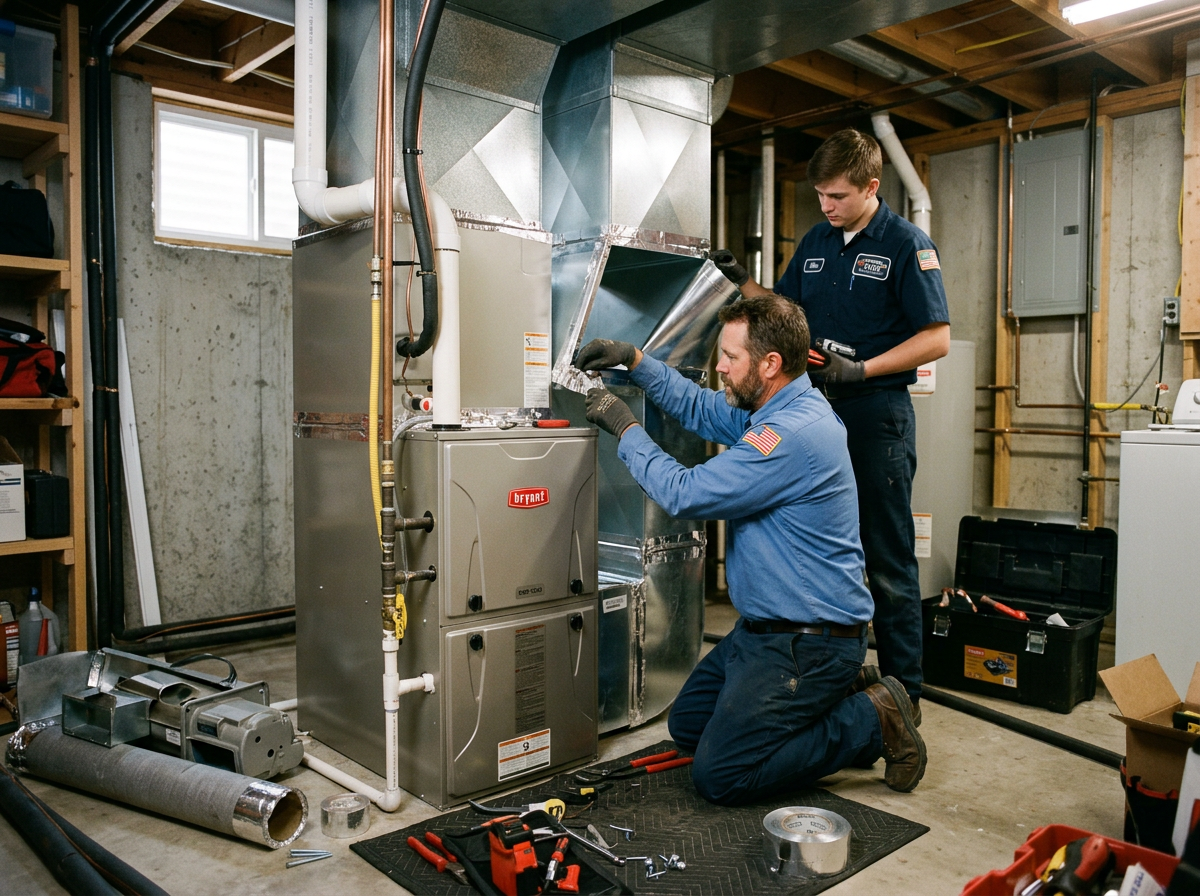
Furnace installation in Boise typically costs $4,200–$7,800 for an 80% AFUE model sized for a 2,000-square-foot home. Higher-efficiency 95% units push the range to $5,800–$9,400 when homeowners add variable-speed blowers and two-stage burners. These figures cover equipment, basic labor, and standard venting but exclude major duct changes or filtration upgrades common in the Treasure Valley.
Equipment Choices and Base Pricing
An 80% single-stage furnace suitable for most 2000s–2020s tract homes in Meridian, Kuna and Star starts around $2,100–$2,900 before installation. Adding a two-stage or variable-speed model adds $800–$1,600. Propane conversions on rural properties outside Star or Middleton require an extra $650–$1,100 for orifices, regulators and larger burners. Homeowners replacing builder-grade units from the 2010s often stay in the lower half of the overall range unless ductwork needs correction.
How Treasure Valley Inversions Increase Runtime and Cost
Winter inversions trap cold air for days, forcing furnaces to run 18–22 hours instead of cycling every 30–40 minutes. This sustained load favors two-stage or modulating equipment that handles continuous operation without short-cycling. Installers therefore recommend 80,000–100,000 BTU units rather than the smaller single-stage models that suffice in milder climates. The extra capacity and upgraded heat exchangers add $900–$1,400 to the job but reduce wear on the new system.
Wildfire Smoke and Required Filtration Upgrades
Wildfire Smoke and Your HVAC: What Boise Homeowners Should Change explains why MERV 13–16 filters now appear on many bids. Standard 1-inch filters cannot handle the fine particulates that arrive each summer, so technicians install 4–5 inch media cabinets or electronic air cleaners. These additions cost $650–$1,250 and require return-air modifications on many North End bungalows with retrofitted ducting. Filter change intervals drop to 30–45 days during smoke events instead of the usual 90 days.
Ductwork and Home-Specific Labor Factors
North End bungalows frequently need duct sealing or resizing when the original gravity system is tied into a new forced-air furnace. Meridian and Star tract homes from the 2000s often have undersized returns that must be enlarged to accommodate higher airflow from variable-speed blowers. Each of these corrections adds 6–12 labor hours at local rates. Furnace Installation crews typically quote these modifications separately after inspecting the attic or crawlspace.
Sizing for Dry Air and Daily Temperature Swings
Furnace Sizing for Boise's Dry Air and 40-Degree Daily Swings shows why Manual J calculations matter more here than rule-of-thumb sizing. Shoulder-season swings of 35–40°F mean the system must handle both 25°F mornings and 60°F afternoons without short-cycling. Oversized single-stage units create humidity problems in the already dry air, while properly sized two-stage models maintain comfort and extend equipment life to 15–18 years instead of the 10–12 years common with mismatched equipment.
When Replacement Makes More Sense Than Repair
When to Repair and When to Replace a Furnace in the Treasure Valley notes that 80% furnaces installed before 2015 in Kuna and Star are now reaching the end of expected service life. When repair quotes exceed $1,800–$2,200 on units older than 12 years, replacement often costs less over the next five seasons because the new system includes modern filtration and better staging. Homeowners who obtain itemized bids that separate equipment, labor, duct changes and filtration can compare true long-term costs without guessing.
Obtain written quotes that list every line item—equipment model, filter cabinet size, duct modifications and labor hours—then compare them against the specific conditions in your home rather than generic national averages.